10680 Jones Rd, Ste 800, Houston, TX 77065

Missing teeth affect more than appearance — they change how you chew, speak, and feel about your smile. Dental implants are engineered to replace missing tooth roots and support lifelike restorations that reconnect form and function. Whether you lost a tooth to decay, gum disease, or injury, implants offer a durable path to restoring a complete, healthy mouth.
At Janus Dentistry, our approach focuses on predictable outcomes and patient comfort. We evaluate the whole mouth — not just the gap — to design a treatment plan that supports long-term oral health. Implants can preserve adjacent teeth, maintain jawbone structure, and give you back the ease of eating and speaking you may have lost.
Choosing implants means considering both the surgical placement and the final restoration. Careful planning and modern imaging let our team visualize bone, nerve pathways, and adjacent teeth so the implant is positioned for optimal support and esthetics. The result is a replacement that feels natural and functions like a real tooth.

Dental implants are made from biocompatible materials and are designed to bond with your jawbone. Once integrated, an implant behaves like a tooth root, providing a stable foundation for a crown, bridge, or denture. This root-like stability is the key reason implants restore chewing efficiency and comfort better than removable options.
Because the implant transmits functional forces to the bone, it helps preserve bone volume over time. That preservation supports facial structure and reduces the sunken appearance that can accompany long-term tooth loss. For many patients, this structural benefit is as important as the cosmetic improvement.
Implant restorations are crafted to match the color, shape, and proportion of your natural teeth. Advanced digital workflows and high-quality materials let us shape crowns and bridges that blend seamlessly with the surrounding dentition, producing a balanced, natural-looking result.
Implant success depends on a process called osseointegration — the direct connection between bone and the implant surface. This biologic bonding creates a firm attachment that can last for many years when supported by good oral hygiene and routine dental care. Success rates in appropriate candidates are very high, reflecting both material science and refined surgical techniques.
Not all treatment paths follow the same schedule. Some patients receive a provisional restoration on the same day as implant placement, while others wait for full healing before final crowns are attached. Your timeline will reflect your specific anatomy, the number of implants, and whether preparatory procedures like bone grafting are required.
We emphasize communication and education throughout the process so you know what to expect at every stage. Preoperative planning, clear anesthesia and sedation options, and detailed aftercare instructions help minimize surprises and support a comfortable recovery.
Compared with removable appliances, implant-supported restorations offer freedom from slipping, clicking, or the need for adhesives. That translates into greater confidence when talking, eating, or smiling in social settings. For many patients, the reliability of an implant-supported tooth is a major quality-of-life improvement.
Implants also protect nearby teeth. Unlike traditional bridges that require the reduction of adjacent healthy teeth, implants can stand independently. This conservative approach helps preserve natural tooth structure and supports better oral health over the lifetime of the smile.
Another key benefit is fewer dietary restrictions. Implant-supported restorations allow patients to enjoy a broad range of foods with minimal worry, which can support better overall nutrition and a more enjoyable daily life.

Implant therapy is versatile. For a single missing tooth, a single implant topped with a crown provides a discreet, tooth-preserving solution. When multiple teeth are missing, strategically placed implants can support bridges that span gaps without relying on adjacent natural teeth for support.
For patients missing most or all teeth, full-arch implant solutions provide fixed, non-removable restorations that closely mimic the function of natural dentition. These options can dramatically improve comfort and confidence compared with traditional removable dentures.
There are also implant-retained overdentures that attach to a small number of implants and provide increased retention while remaining removable for cleaning. Your clinical situation and personal preferences guide the choice between fixed and removable implant options.
A single-tooth implant replaces both the root and visible portion of a tooth, preserving the health of neighboring teeth and delivering a natural feel. Small-span implant-supported bridges use two or more implants to replace adjacent missing teeth without altering surrounding dentition, making them an excellent conservative choice for many patients.
Full-arch replacement can be accomplished with a small number of implants that anchor a complete set of fixed teeth, or with overdentures that snap to implant attachments for improved stability. These solutions restore chewing power and smile aesthetics, and they often allow for provisional teeth to be placed promptly so patients don’t have to wait to show their new smile.
Most adults with good general health are potential candidates for implants, but candidacy depends on several factors: the condition of the jawbone, gum health, systemic health, and oral hygiene habits. During a thorough exam, we assess bone volume, the position of surrounding teeth, and any medical considerations that could affect healing.
When bone quantity or quality is limited, preparatory procedures such as bone grafting or sinus augmentation can often rebuild the support needed for implant placement. We tailor recommendations to fit each patient’s anatomy and goals so treatment is both safe and effective.
Implant treatment follows a sequence: detailed planning, surgical placement of the implant(s), a healing period for osseointegration, and finally the restorative phase where crowns, bridges, or dentures are attached. The surgical step is typically performed on an outpatient basis with local anesthesia and, when appropriate, sedation for comfort.
Healing times vary according to the implant location, bone quality, and the number of implants. During the osseointegration phase, temporary restorations can maintain appearance and function until the final prosthesis is ready. Throughout, we provide clear guidance on medications, diet, and oral hygiene to support successful healing.
When the final restorations are placed, adjustments are made to ensure proper bite, esthetics, and comfort. Aftercare includes regular dental visits and a solid home-care routine to protect both the soft tissues and the implant-supported restorations.
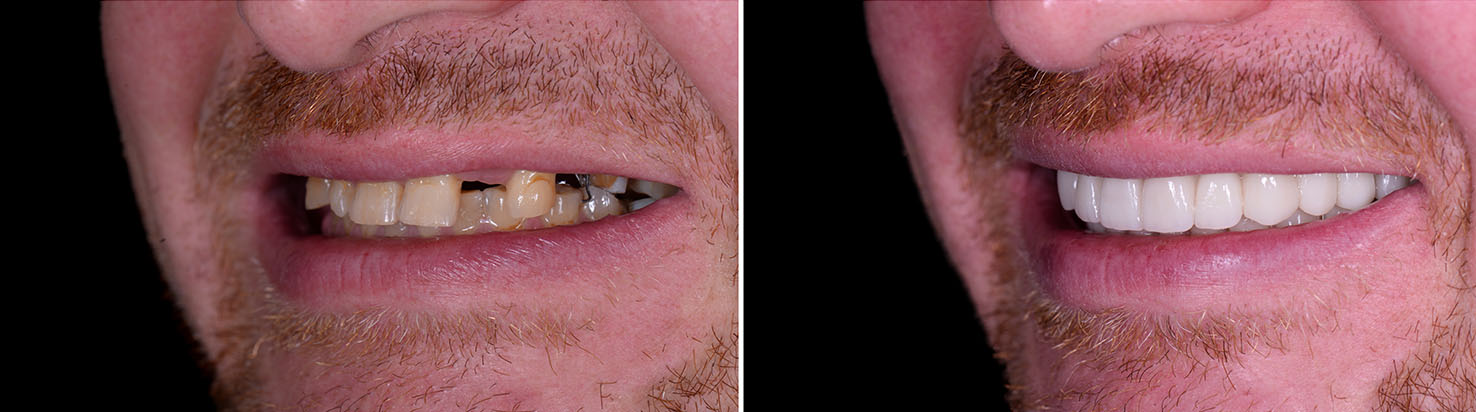
Bone loss can occur after tooth extraction or with long-standing periodontal problems. When there isn’t enough bone to stabilize an implant, grafting procedures can rebuild the jaw so implants have a firm foundation. This step is common and highly successful when planned and executed properly.
Grafting materials and techniques vary, from minimally invasive grafting in the extraction site to larger reconstructive procedures. The goal is to create a stable environment that supports osseointegration and long-term implant success. Your clinician will explain the recommended approach and why it’s in the best interest of your lasting oral health.
Replacing missing teeth with dental implants is a long-term investment in your oral health and quality of life. Implants restore function, support facial structure, and produce esthetic results that blend naturally with your remaining teeth. If you’re considering implant therapy, we invite you to schedule a consultation so we can evaluate your needs and outline a personalized treatment plan.
Our team is committed to clear communication, careful planning, and predictable outcomes as we guide you through every stage of care. Contact us for more information or to arrange an appointment to explore whether implants are the right solution for your smile.
Dental implants are titanium or zirconia fixtures that are placed in the jaw to replace missing tooth roots and provide a stable foundation for crowns, bridges, or implant-supported dentures. Once placed, the implant undergoes a biologic process called osseointegration, during which bone grows tightly against the implant surface to create a durable bond. That root-like stability allows an implant restoration to function much like a natural tooth, restoring chewing efficiency and comfort.
Implant restorations are then attached to the integrated fixture and designed to match the color, shape, and size of your natural teeth. Modern digital planning and restorative materials let clinicians craft prostheses that blend with surrounding dentition and support natural facial contours. Because the implant transmits functional forces to the jawbone, it also helps preserve bone volume and facial structure over time.
Most healthy adults with sufficient jawbone volume and good gum health are potential implant candidates, but candidacy depends on a comprehensive clinical evaluation. The clinician will review your medical history, assess oral hygiene, check for periodontal disease, and use imaging to measure bone quantity and quality. Certain conditions such as uncontrolled diabetes, heavy smoking, or ongoing oral infections can affect healing and may require stabilization before implant therapy.
When bone or soft-tissue deficiencies exist, many patients can still receive implants after preparatory procedures such as bone grafting or sinus augmentation. Age alone is not a contraindication; the primary considerations are overall health and the ability to maintain consistent hygiene and follow-up care. A detailed consultation helps determine the safest, most predictable path for each individual.
Treatment begins with a thorough consultation that includes a clinical exam, digital imaging, and a review of your medical history to design a personalized plan. Advanced imaging and planning software help the team visualize bone, nerve pathways, and adjacent teeth so implants are positioned for optimal function and esthetics. The surgical stage follows, typically performed under local anesthesia with sedation options available for comfort.
After placement, a healing period allows osseointegration to occur before the final restoration is attached, though some patients may be candidates for provisional restorations on the same day. Once integration is confirmed, impressions or digital scans are taken to fabricate the final crown, bridge, or denture, and adjustments are made to ensure proper bite and esthetics. Regular follow-up visits and a good home-care routine support long-term success.
Healing timelines vary with individual anatomy, implant location, bone quality, and whether additional procedures such as grafting were performed. In many cases osseointegration takes several months, commonly ranging from three to six months, though some clinical protocols allow for earlier loading depending on stability and bone conditions. Your clinician will outline a timeline tailored to your situation and let you know when it is safe to proceed to the restorative phase.
Temporary teeth or provisional restorations can often maintain appearance and function during healing, so most patients do not need to remain without teeth. The final prosthesis is delivered after the implant has demonstrated stable integration and proper soft-tissue healing. Throughout recovery you will receive guidance on medications, diet, and oral hygiene to support predictable outcomes.
Bone grafting is a surgical technique used to rebuild areas of the jaw that have lost volume or density due to tooth loss, infection, or long-term periodontal disease. When there is insufficient bone to support an implant, grafting materials are placed to encourage new bone formation and create a stable foundation for future implant placement. Grafting can be performed at the time of extraction, prior to implant placement, or simultaneously with implant surgery depending on clinical needs.
Techniques and materials vary from small socket grafts to larger ridge augmentations or sinus lifts, and the choice depends on the size and location of the defect. In many cases grafting is highly successful and expands the number of patients eligible for implants. Your clinician will explain the recommended approach, expected healing timeline, and how grafting supports long-term implant stability.
Dental implant therapy is generally predictable, but like all surgical procedures it carries potential risks, including infection, implant failure, nerve or sinus injury, and soft-tissue complications. Peri-implant mucositis and peri-implantitis are inflammatory conditions that can jeopardize implant health if oral hygiene and professional maintenance are not maintained. Careful planning, sterile technique, and thorough postoperative instructions help reduce the likelihood of complications.
Early signs of trouble—such as persistent pain, swelling, or mobility—should be evaluated promptly to prevent escalation. Systemic factors like uncontrolled medical conditions or smoking can increase complication rates, which is why a comprehensive medical review is part of the planning process. With appropriate selection, technique, and follow-up care, the incidence of major complications is low.
Daily home care is essential: brush twice daily with a soft-bristled toothbrush, clean between implants and adjacent teeth with floss or interdental brushes, and follow any additional instructions from your clinician. Implants require the same careful hygiene as natural teeth to prevent plaque accumulation and inflammation of surrounding tissues. Using nonabrasive fluoride toothpaste and avoiding hard or sticky foods during early healing helps protect the restoration and supporting tissues.
Regular professional care is equally important; schedule routine dental checkups and cleanings so your provider can assess implant health, monitor soft tissues, and perform specialized maintenance when needed. Your dental team may recommend more frequent visits during the first year after restoration and then annual or semiannual evaluations based on risk factors. Documented home care and consistent professional follow-up are key predictors of long-term implant success.
Yes, implants can replace a full arch using several different strategies that restore function and esthetics more predictably than conventional dentures. Fixed full-arch restorations anchor a complete set of teeth to multiple implants and provide a nonremovable solution that closely mimics natural dentition. Implant-retained overdentures attach to fewer implants and remain removable for cleaning while offering improved stability and retention over traditional removable prostheses.
Examples of full-arch options include fixed implant bridges, All-on-6 or similar protocols, and implant-supported overdentures; the best choice depends on bone availability, patient preference, and functional goals. A thorough evaluation including 3-D imaging helps determine implant placement and prosthetic design to achieve optimal chewing efficiency and esthetics. Your clinician will review the pros and cons of each approach and recommend the most appropriate solution for your needs.
When placed and restored properly, implants preserve neighboring teeth by eliminating the need to reduce adjacent healthy tooth structure for a bridge. Because implants transmit chewing forces into the jaw, they stimulate and help maintain bone volume, reducing the bone loss that commonly follows tooth extraction. This preservation of bone supports facial contours and helps prevent the sunken appearance that can develop with long-term tooth loss.
Unlike removable appliances that can accelerate ridge resorption through pressure on soft tissues, implant-supported restorations distribute functional loads to the underlying bone, promoting a healthier oral environment. Careful planning ensures implants are positioned to avoid damage to adjacent teeth and important anatomical structures, preserving the integrity of the entire arch. Regular monitoring and maintenance help sustain these long-term benefits.
During an implant consultation at Janus Dentistry you can expect a comprehensive examination that includes a review of your medical and dental history, a clinical oral evaluation, and digital imaging to assess bone and tooth relationships. The provider will discuss your goals, explain appropriate implant options, and outline any preparatory procedures that may be needed such as extractions or grafting. This visit is an opportunity to ask questions about surgical steps, anesthesia or sedation choices, and the expected timeline for treatment.
Based on the findings, the team will present a tailored treatment plan that addresses functional and esthetic objectives while prioritizing predictable outcomes. They will also explain postoperative care, hygiene expectations, and follow-up schedules to support long-term success. If you are ready to proceed, the office will coordinate scheduling and review preoperative instructions so you are prepared for the surgical phase.