10680 Jones Rd, Ste 800, Houston, TX 77065

At Janus Dentistry, we begin with a clear goal: preserve natural teeth whenever it is safe and sensible to do so. Still, there are occasions when extraction becomes the most responsible choice to protect your oral health, prevent the spread of infection, or support long-term function. Our approach is always deliberate and patient-centered — we explain the “why,” outline options, and plan care around your needs.
Deciding on an extraction is never rushed. We pair a careful clinical exam with diagnostic imaging and a discussion of alternatives so you can make an informed decision. When an extraction is recommended, the objective is to remove the source of pain or disease while keeping recovery as predictable and comfortable as possible.
Below are some of the most common reasons we may recommend removing a tooth. Each situation is different, and treatment is tailored to your individual health, age, and future dental goals.
Primary (baby) tooth that won't give way
Sometimes a deciduous tooth remains anchored long after the permanent tooth beneath it is ready to erupt. This can happen when the primary root fails to resorb or when the tooth becomes fused to the jawbone. Removing an over-retained baby tooth can help the permanent tooth come into place properly and avoid future alignment problems.
Permanent tooth too damaged to restore
Cavities that reach deep into a tooth or extensive structural loss from decay can leave too little healthy material to successfully repair. When restoration would be unreliable or unsafe, extraction prevents ongoing infection and protects neighboring teeth and tissues.
Severe fractures or cracks that compromise the tooth
Teeth can break in many ways. If a fracture extends below the gumline or involves the root in a way that cannot be predictably repaired, removing the tooth may be the most reliable option to relieve pain and prevent future complications.
Advanced periodontal disease affecting support structures
When periodontal disease has caused significant bone and soft tissue loss, teeth can loosen and become sources of chronic infection. In advanced cases, extraction may be required to stabilize the mouth and allow for appropriate periodontal or restorative follow-up.
Impacted or problematic wisdom teeth
Third molars often lack space to erupt normally. Impacted wisdom teeth can damage adjacent teeth, trap bacteria, or develop infections. Early removal is sometimes recommended to prevent future issues; other times monitoring is appropriate until a decision is reached.
Extractions as part of orthodontic planning
In certain orthodontic cases, removing one or more teeth creates the space needed to align the bite properly. These decisions are coordinated with your orthodontist and based on a comprehensive plan to achieve a functional, balanced outcome.

Before any procedure, we take a full medical and dental history to identify factors that influence safety and healing. Certain conditions, medications, or recent illnesses can change the plan; occasionally we’ll request medical clearance from your physician or adjust medications before treatment. Our priority is minimizing risk while optimizing outcomes.
We routinely use diagnostic imaging to evaluate root shape, bone levels, and the relationship of the tooth to nearby structures. Modern digital radiographs let us plan precisely and anticipate whether a case is simple or will require a more involved surgical approach. Knowing what to expect helps us prepare the right setting and the right support, including sedation when appropriate.
We also discuss pain control and anxiety management up front. Local anesthesia is standard for most extractions, and we offer additional comfort measures — from oral or inhaled sedation to IV sedation when indicated — so patients can proceed with confidence. Instructions for the day of the procedure, such as fasting or medication guidance, are provided clearly so there are no surprises.
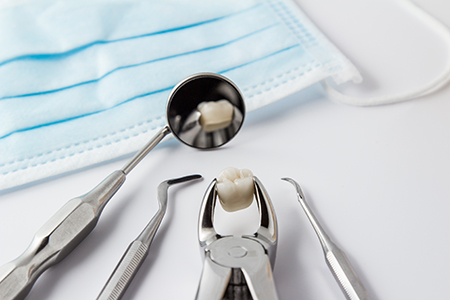
When a tooth is fully visible and its roots are straightforward, we typically perform a simple extraction. After numbing the area thoroughly with local anesthesia, the tooth is loosened and removed with controlled forceps. The technique is efficient and designed to preserve as much surrounding bone and tissue as possible for healing and future restorative options.
Patients frequently tolerate simple extractions very well and can return to normal activity within a day or two. We’ll review at-home care and make plans for any needed replacement of the tooth — whether that be a bridge, denture, or implant — once healing is complete.
Some teeth require a surgical approach: they may be broken at the gumline, fused to bone, or impacted beneath the bone. A surgical extraction can involve a small incision, removal of a bit of bone, or sectioning the tooth to remove it safely. This method gives the surgeon better access and control in difficult cases.
For complex extractions we may work in-house or refer to an oral and maxillofacial surgeon depending on the case and patient needs. Either way, we coordinate care so you receive the appropriate level of expertise and comfort management, and we clearly explain the anticipated recovery and follow-up steps before treatment.

Healing after an extraction is a gradual process. While individual recovery varies, following clear post-operative guidance reduces complications and speeds return to normal function. We provide personalized written instructions at the time of your procedure, and these general principles apply to most simple extractions.
Expect some soreness and mild swelling during the first 48–72 hours. Pain is typically manageable with over-the-counter medication or a short course of prescription analgesics when necessary. Keep in mind that avoiding activities that disturb the clot — like vigorous rinsing or using a straw — is important to prevent complications such as dry socket.
Maintain gentle oral hygiene and a soft-food diet for the first few days, and plan for a brief period of reduced physical exertion. If stitches are placed, we’ll tell you whether they will dissolve or need removal at a follow-up visit. Following our instructions closely helps ensure predictable healing and a timely transition to any restorative steps you may need next.
Control bleeding with gauze
We’ll place gauze over the socket and ask you to bite down gently to help form a clot. Change the gauze as directed and maintain firm but comfortable pressure until bleeding subsides. Some light oozing can be normal for up to 24 hours.
Avoid chewing or biting while numb
Until the anesthetic fully wears off, take care not to accidentally bite your cheek, lip, or tongue.
Follow medication instructions
If antibiotics are prescribed, complete the full course as directed. For pain control, take analgesics as recommended — starting pain medication before the numbness fades can help prevent a rebound in discomfort.
Protect the clot
Do not rinse vigorously, spit forcefully, or use a straw for several days. These actions can dislodge the clot that forms in the socket and interfere with healing.
Reduce swelling with ice
Apply a cold pack to the cheek in 10-minute intervals during the first day to minimize swelling. After 48 hours, switching to gentle heat can help if swelling persists.
Refrain from smoking
Tobacco use significantly delays healing and raises the risk of complications. Avoid smoking and nicotine products for at least the first week after extraction.
Choose gentle foods
Stick to soft, cool or lukewarm foods for the first couple of days. Avoid spicy, crunchy, or very hot items that could irritate the surgical site.
Keep the mouth clean — but be gentle
Resume brushing the rest of your teeth the day after surgery, taking care to avoid the extraction area. A mild saltwater rinse can be used after 24 hours to keep the area fresh — rinse gently without force.
Attend scheduled follow-up
If sutures were placed or additional monitoring is needed, make sure to keep your follow-up appointment so we can assess healing and plan any restorative work.
If you notice heavy or prolonged bleeding, increasing pain despite medication, fever, foul taste or odor, or significant swelling that worsens after 48 hours, notify our office for guidance. These signs can indicate a complication that may require prompt attention.
Most extractions heal without major issues, but knowing what to watch for helps you get care quickly if something unexpected occurs. Severe, unrelenting pain; sustained bleeding; spreading redness; fever; or numbness that persists beyond the expected timeframe are signals to contact your dental team. Timely intervention can prevent complications from becoming more serious.
One relatively common complication is a dry socket, where the protective blood clot is lost and the underlying bone becomes exposed; it usually causes throbbing pain a few days after extraction. If this happens, we can provide targeted treatment to relieve pain and promote healing. Infections, while uncommon when proper care is followed, require antibiotics or other measures and are managed promptly.
For patients with medical conditions that affect healing — such as diabetes or immune-suppressing conditions — we coordinate closely with your physician as needed. If specialist care is required at any point, we’ll make recommendations and arrange referrals so you receive the appropriate level of support.
When an extraction is necessary, patients benefit from a team oriented toward gentle, precise techniques and clear communication. Our clinicians bring years of experience in routine and complex extractions, and we prioritize comfort and predictable healing from the first consultation through follow-up care.
If a missing tooth needs replacement, we will review all suitable options — from removable dentures and fixed bridges to dental implants — and help you weigh what best fits your oral health and lifestyle. We coordinate any restorative planning so the transition from extraction to replacement is as seamless as possible.
Your treatment will be guided by careful diagnostics, conservative decision-making, and individualized follow-up. At Janus Dentistry we aim to make the process understandable and manageable so you can move forward with confidence.
In summary: tooth extractions are sometimes the healthiest choice for resolving pain, infection, or structural problems. We take a measured approach — assessing risks, explaining alternatives, and supporting recovery with clear instructions and follow-up. If you have questions or would like to discuss your situation in more detail, please contact us for more information.
Tooth extraction is recommended when retaining the tooth would threaten your oral health or cause ongoing pain. Common clinical reasons include extensive decay that cannot be predictably restored, severe fractures that extend below the gumline, advanced periodontal disease with significant bone loss, or infection that does not respond to conservative treatment. Our team at Janus Dentistry focuses on conservative care first and recommends extraction only when it is the safest, most reliable option.
Before any extraction is scheduled, we perform a thorough exam and diagnostic imaging to evaluate root anatomy and bone support. We also review your medical history and discuss alternatives such as endodontic treatment or restoration when feasible. This measured approach helps ensure that removing a tooth is the right decision for your long-term oral function and health.
A simple extraction is performed on a tooth that is fully visible in the mouth with straightforward root anatomy. After local anesthesia numbs the area, the dentist loosens the tooth with elevators and removes it with forceps, taking care to preserve surrounding bone and soft tissue. Recovery from a simple extraction is usually predictable and relatively quick, with most patients returning to normal activities in a day or two.
Surgical extractions are used for teeth that are broken at the gumline, impacted, or fused to bone and therefore require more advanced access. This technique may involve a small incision, removal of a bit of bone, or sectioning the tooth into pieces to extract it safely. Surgical cases can require additional post-operative instructions, closer follow-up, and sometimes collaboration with an oral and maxillofacial surgeon for complex anatomy or medical considerations.
Preparation begins with a complete medical and dental history so we can identify any factors that affect safety and healing, including medications and systemic conditions. Diagnostic imaging, such as digital radiographs, helps us anticipate root shape and proximity to vital structures so we can plan the least invasive approach. If you are prescribed antibiotics or asked to adjust medications prior to the procedure, follow those instructions carefully to minimize risk.
If you expect to use sedation beyond local anesthesia, arrange for a responsible adult to drive you home and plan for a short recovery period before resuming normal activities. Follow fasting guidelines or medication directions provided by the office to ensure comfort and safety during the appointment. Clear communication with your dental team about anxiety, previous reactions, or special medical needs will help us tailor the plan to your circumstances.
Local anesthesia is standard for most extractions and effectively numbs the treatment area so the procedure is comfortable. For patients with dental anxiety or for more complex surgical cases, additional options may include inhaled nitrous oxide, oral sedatives, or intravenous (IV) sedation depending on medical suitability and patient preference. Each modality has benefits and considerations, and we discuss safety, monitoring, and expected effects before proceeding.
Choice of sedation is guided by the complexity of the extraction, your medical history, and your comfort level. If sedation is planned, we provide specific pre-appointment instructions such as fasting and medication guidance. Arranging for a companion to accompany you home is required for moderate or deeper sedation to ensure a safe recovery after the appointment.
Extractions of primary (baby) teeth are sometimes necessary when a tooth remains over-retained, is severely decayed, or is blocking the eruption of the permanent tooth. Removing an over-retained primary tooth can prevent crowding and help the permanent tooth come into place properly, and the decision is made with consideration of the child’s age and dental development. We use behavior-friendly techniques and appropriate anesthesia to keep children comfortable and reduce fear.
When treatment planning for young patients, we coordinate with parents and, when appropriate, pediatric specialists to ensure the most conservative and developmentally appropriate care. Regular monitoring and timely intervention often prevent more extensive problems later on. Our office welcomes patients of all ages and emphasizes gentle, precise care tailored for children and families.
Wisdom teeth are often removed when they are impacted, cause pain, damage adjacent teeth, or create pockets that trap bacteria and lead to infection. Not all third molars need extraction; some can be monitored if they erupt normally and remain healthy without causing symptoms. The decision to remove wisdom teeth is individualized and based on clinical exam and radiographic evaluation of space, angulation, and risk of future problems.
Early evaluation during the late teen years can help identify potential issues before symptoms develop, but we also consider each patient’s overall dental development and medical history. If a surgical extraction is indicated, we will discuss whether the procedure can be completed in our office or if referral to an oral surgeon is the safest option. Clear explanation of expected recovery and follow-up care is provided before treatment so you know what to expect.
Initial healing after an extraction commonly involves soreness and mild swelling for the first 48 to 72 hours, with most acute symptoms improving significantly within a week. Pain is usually well controlled with over-the-counter analgesics or a short course of prescription medication when needed, and following post-op instructions helps reduce complications. The protective blood clot that forms in the socket is a key part of early healing and should be preserved by avoiding activities that could dislodge it.
Complete bone remodeling and soft tissue maturation can take several weeks to a few months depending on the size of the socket and whether additional procedures, such as bone grafting, were performed. If sutures were placed, your clinician will advise whether they will dissolve or require removal at a follow-up visit. Plan for a brief period of reduced physical exertion and a soft-food diet initially to support predictable healing.
Protecting the blood clot that forms in the extraction socket is the single most important step to lower the risk of dry socket, a painful condition where the clot is lost and bone becomes exposed. Avoid vigorous rinsing, spitting forcefully, and using straws for several days after the procedure, and do not smoke or use nicotine products as these significantly delay healing and increase complication risk. Follow any prescribed antibiotic regimen exactly as directed and take pain medications according to instructions to maintain comfort and support healing.
Maintain gentle oral hygiene by brushing remaining teeth while avoiding direct trauma to the surgical site, and begin gentle saltwater rinses only when recommended by your clinician. Attend scheduled follow-up appointments so your provider can assess healing and intervene early if signs of infection or impaired recovery appear. Prompt communication with the office at the first sign of unusual pain, swelling, fever, or persistent bleeding allows timely management and better outcomes.
Contact your dental team promptly if you experience heavy or prolonged bleeding that does not improve with firm pressure, severe unrelenting pain despite medication, increasing swelling after the first 48 hours, fever, or a foul taste or odor in the mouth. Numbness that persists beyond the expected timeframe or new weakness in the face or jaw mobility are also reasons to seek immediate evaluation. These symptoms can indicate complications such as infection, dry socket, or nerve involvement and require timely attention.
If you notice any concerning signs, call the office during business hours or follow the emergency contact instructions provided for after-hours care. Our clinical team will assess your symptoms, provide guidance, and arrange urgent follow-up when needed to address problems early and reduce the chance of more serious issues. When in doubt, contacting the practice for advice is the safest course of action.
Once the extraction site has healed, several restorative options are available to replace a missing tooth, including removable dentures, fixed bridges, and dental implants. The right choice depends on your overall oral health, jawbone volume, adjacent teeth, functional needs, and aesthetic preferences, and we review the pros and cons of each option during treatment planning. Timing is important: some restorations are delayed until bone and soft tissue have matured, while others can be planned proactively to preserve function and appearance.
Dental implants often provide a long-term, fixed solution that helps preserve bone and restore natural function, while bridges and dentures can be excellent alternatives depending on the clinical situation. Your dentist will coordinate any necessary preparatory care, such as bone grafting or periodontal treatment, and explain the sequence of procedures for a seamless transition from extraction to replacement. Together we develop a restorative plan that supports your oral health and lifestyle goals.